
Fahrenheit to Celsius
Fahrenheit to Celsius — get instant, precise results. Whether you are validating cold-chain logistics data, managing server room temperatures, or handling international trade documentation, our fahrenheit to celsius tool delivers immediate accuracy.
Secure & Private: Any files processed on YellowPDF are automatically deleted after 1 hour.

Why Fahrenheit to Celsius Matters in Global Business
In globalized business operations, precision is profit. The United States relies heavily on the Fahrenheit scale, while over 190 countries operate strictly using Celsius. Understanding fahrenheit to celsius is not just a mathematical exercise — it is a fundamental requirement for international trade, logistics, and regulatory compliance.
Misinterpreting temperature data between American suppliers and European or Asian buyers can lead to catastrophic supply chain failures, particularly in industries governed by strict regulations such as those monitored by the FDA or international health organizations. A reliable fahrenheit to celsius reference eliminates that risk.
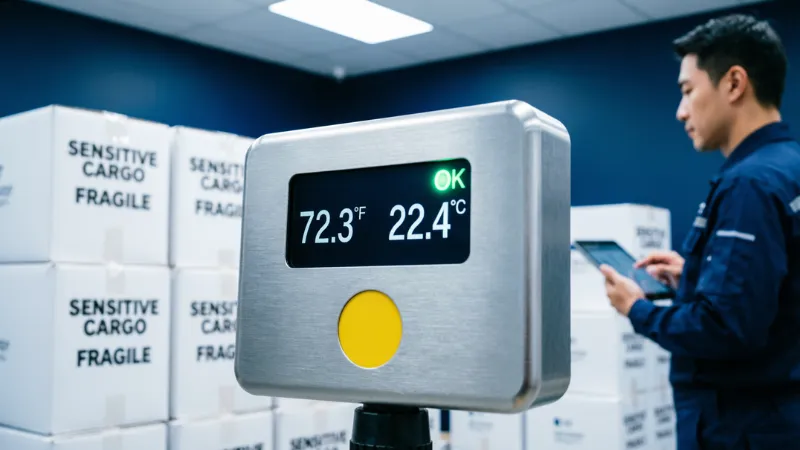
Real-Life Scenario: The Cold Chain Crisis
Consider a US-based pharmaceutical company exporting temperature-sensitive assets to the European Union. Storage requirements are strictly set between 35.6°F and 46.4°F. However, EU logistics partners configure refrigeration units based on Celsius. If a logistics coordinator makes a fahrenheit to celsius error and sets the containers outside the strict 2°C to 8°C threshold, the entire shipment is compromised.
A discrepancy of just a few degrees leads to customs rejection and voided insurance claims. Using an institutional-grade fahrenheit to celsius tool eliminates human error and protects your investments.
Fahrenheit to Celsius — Industrial Benchmarks
Below is a quick fahrenheit to celsius reference table showing critical temperature thresholds across major global industries:
| Industrial Sector | US Standard (°F) | Global Standard (°C) | Financial Risk of Error |
|---|---|---|---|
| Data Center Infrastructure | 70°F to 75°F | 21.1°C to 23.8°C | Hardware failure and massive increases in cooling costs. |
| Pharma Cold Chain | 35.6°F to 46.4°F | 2°C to 8°C | Loss of asset efficacy and supply chain contract breach. |
| Frozen Food Export | -4°F | -20°C | Customs rejection at EU borders due to bacterial risks. |
| Wine & Beverage Storage | 55°F to 58°F | 12.8°C to 14.4°C | Quality degradation and lost premium product value. |
| Chemical Transport | 59°F to 77°F | 15°C to 25°C | Hazardous reaction risk and regulatory non-compliance. |
The Fahrenheit to Celsius Formula Explained
The standard fahrenheit to celsius formula is: °C = (°F − 32) × 5 / 9. You subtract 32 from the Fahrenheit value, multiply the result by 5, then divide by 9. This formula has been the global scientific standard for over two centuries. While the math is straightforward, manual calculations under time pressure in logistics or compliance settings introduce unacceptable error risk. That is exactly why automated fahrenheit to celsius tools exist — to guarantee precision when it matters most.
Common Fahrenheit to Celsius Values
Here are some of the most frequently searched fahrenheit to celsius reference points that professionals and everyday users look up regularly:
| Fahrenheit (°F) | Celsius (°C) | Context |
|---|---|---|
| 32°F | 0°C | Water freezing point |
| 68°F | 20°C | Standard room temperature |
| 72°F | 22.2°C | Comfortable indoor climate |
| 98.6°F | 37°C | Normal human body temperature |
| 100°F | 37.78°C | Hot weather threshold |
| 212°F | 100°C | Water boiling point |
| -40°F | -40°C | The point where both scales meet |
Frequently Asked Questions About Fahrenheit to Celsius
What is the fahrenheit to celsius formula?
The fahrenheit to celsius formula is: °C = (°F − 32) × 5 / 9. Subtract 32 from your Fahrenheit value, multiply by 5, and divide by 9. For business operations, we recommend using our automated fahrenheit to celsius tool to prevent any calculation errors.
Why is fahrenheit to celsius important in logistics?
Because the US utilizes Fahrenheit, while the majority of international trading partners use Celsius. Discrepancies in fahrenheit to celsius results can lead to improperly stored goods and significant financial damage in global supply chains.
What is 100 fahrenheit to celsius?
100 fahrenheit to celsius equals 37.78°C. This is considered extremely hot weather and requires specific cooling protocols in industrial environments such as data centers and warehouses.
At what temperature are fahrenheit to celsius values the same?
The Fahrenheit and Celsius temperature scales intersect at exactly −40 degrees. Therefore, −40 fahrenheit to celsius gives the same number: −40. This is the only point where the two scales are identical.
How can I download my fahrenheit to celsius result?
Click the "Download PDF Report" button above your fahrenheit to celsius result. Your browser will generate a free, clean PDF document of your current calculation — ideal for attaching to business emails or compliance reports.
Is the fahrenheit to celsius tool on YellowPDF free?
Yes. Our fahrenheit to celsius tool is completely free to use with no registration required. We built it to serve logistics professionals, students, engineers, and anyone who needs accurate temperature data on demand.
About YellowPDF
YellowPDF is a premier digital utility platform providing high-precision formatting tools and data resources. We developed this fahrenheit to celsius tool to assist supply chain managers, financial analysts, and global traders in eliminating manual calculation risks. Our algorithms are designed to ensure enterprise-level reliability while keeping our interface clean and free to use.